Tuesday, January 27, 2026

Who is "Dozer"?

Who or what is Dozer you may ask? If you had asked me that question a week ago, I would have had no clue, but today I can confidently say, I do!

While teaching one of my Introduction to Bird Photography masterclasses at the recent Morro Bay Bird Festival, one of the participants pointed out a long-billed curlew on Morro Strand with banding on its legs. I quickly took a few photos and suggested others do as well with the possibility of finding out more as far as where the bird came from, as well as potentially contributing to citizen science by assisting those that would have originally banded the bird.

When I got back home to Monterey, I started going through the photos I had taken with one in particular standing out. It clearly showed a band on each of the bird's legs, but also a small transmitter pointing up from its back. So this bird was also fitted with a tracking device of some sort! How cool is that!

Well now I really had to find out the story and decided to contact the Morro Coast Audubon Society to see if they knew anything or anyone that could help with finding out more. I sent two photos including the one with the visible transmitter.

I quickly received a phone call from Marcella Munson, VP of the society who was excited and thrilled that Dozer had been spotted, since he has become a bit of a legend in Morro Bay.

Dozer was banded and fitted with a satellite transmitter in May 2020 by the Intermountain Bird Observatory at his breeding grounds in Indian Valley in the West Central Mountains of Idaho, as part of a study called the "Curlew Project". 

Long-billed curlews, like many other species are in decline due to habitat loss in their nesting grounds. Breeding populations throughout southwestern Idaho have sustained dramatic losses with declines reaching roughly 98% over the course of 40 short years. 

This drastic decline prompted researchers at Boise State University’s Intermountain Bird Observatory (IBO) to track these birds with the help of satellite transmitters. This important research has not only helped piece together their migratory connectivity or “pathways”, but has also uncovered that breeding curlews on the public lands throughout southwest Idaho have been heavily impacted by illegal shooting. Curlew conservation education has become the mission of Heather Hayes, the IBO’s Community Science Coordinator and research biologist for the “Curlew Crew.”

Here is an in-depth story about Dozer from the university, as well as fascinating satellite transmitter maps showing his amazing journey!


When you see long-billed curlews along our beaches here in California, these beautiful, fascinating birds have travelled hundreds of miles to feed and build strength before for their long journey back in the spring to their breeding grounds. 

Many other shorebirds overwinter here for the same reason, therefore, please adhere to signage regarding off-leash dogs, because every time they are forced to fly, they are using up much needed reserves, which will ultimately impact their breeding success. 

I am so happy knowing Dozer is doing well and that through my photography, "as we all can do", contribute to conservation. 

Tuesday, January 20, 2026

Long-billed Curlew wins 2025 California Watchable Wildlife Photo Competition!

I was thrilled to learn my image of a long-billed curlew about to swallow a sand crab won the 2025 California Watchable Wildlife Photo Contest.

Captured on Morro Strand in 2024 while attending the annual Morro Bay Bird Festival, I submitted the image to the contest  in January 2025 and at that time was selected as one of the top three photos submitted for the January/February period.

Submissions throughout the year are broken down into six, two month periods with the three top photos announced every two months. These 18 photos at the end of the year are then judged with a final three overall winners announced in January of the following year. 

The three winning categories are "California Wildlife Photo of the Year", "Sierra Nevada Conservancy Winner" and in my case, "California Watchable Wildlife Winner". 

I was honored locally by my council member Jean Rasch in Monterey, presented with a proclamation from the Mayor of Monterey recognizing my achievement. 


Thursday, October 2, 2025

Farewell Jane

Yesterday on October 1st, 2025 the world learned of the passing of Jane Goodall. It came as a surprise as I had seen her back in April at an event in Carmel, California, where I had the privilege of photographing her onstage with Charles Knowles from the Wildlife Conservation Network.  

Turning the clock back ten years, Jane was the honored guest at the Wildlife Conservation Network's annual Expo in San Francisco. It was at this event I was a volunteer and got to see Jane for the very first time in my life. I could not believe it and joined the long queue with hundreds of others to have my photo taken with her. What I will remember from that is how she smiled throughout, forever gracious and interested in what people had to say. 

Jane Goodall

Her message of hope for the planet was relentless and even at 91, she was traveling 300 days of the year around the world. It was here in California she bid us all goodbye in her sleep. Farewell Jane and thank you for inspiring me to make a difference.


Wednesday, September 24, 2025

A Hummingbird in Manhattan!

I never would have dreamed of seeing my work in mid-town Manhattan, but it is currently being displayed by the National Audubon Society as part of their campaign to promote bird conservation during Climate Week. 

Audubon Bus Shelter Sign

How on earth did that happen? A couple of weeks ago I was contacted by Audubon's director of photography with a request to use my photo of an Allen's Hummingbird for a large digital poster to be displayed in several bus shelters for a two week period beginning the week of September 24th.

The photo was taken at the UCSC Arboretum and I captured several images as this colorful male kept leaving to feed and return to his perch. This allowed me to prepare by pre-focusing in the exact spot where he would land and also use a remote trigger so I could stand back and watch his approach. Out of all the images captured, this particular one stood out for me as I loved the dead center, head on pose with wings spread. 

I had submitted the photo a few years back for their annual bird photography competition along with thousands of others every year, so it was an absolute surprise that they somehow dug this up and selected it as the photo they wanted to use. What an absolute thrill and an honor to think my little hummingbird is doing his part for birds and conservation. 


Wednesday, April 16, 2025

Sea Otters and Jane Goodall's Message of Hope

I recently had the honor of being asked to photograph Jane Goodall at the Sunset Center in Carmel, California. Jane was the special guest at an event hosted by the Wildlife Conservation Network (WCN) to announce their new Sea Otter Fund

Jane Goodall at Sunset Center

The goal of the fund is to restore sea otters along their historical U.S. Pacific Coast range. Once abundant from Baja California across the north Pacific Rim to Japan, sea otters were nearly hunted to extinction for their fur. As a keystone species, sea otters provide multiple benefits to nearshore ecosystems, including helping maintain the health of kelp and seagrass systems, promoting biodiversity, and improving resilience to the effects of climate change.

Southern Sea Otters in Kelp

The first half of the event centered on Jane and her life's work through a conversation with Charlie Knowles, founder of WCN. We heard about her childhood growing up in the UK, followed by her initial visit to South African and ultimately to Kenya where she would begin her lifelong and groundbreaking relationship with chimpanzees.

The second half involved a talk by a panel of experts in sea otters including Julie Packard from the Monterey Bay Aquarium.  We learned about the need to protect this beautiful, endearing species and how crucial they are to the future health of our coastal ecosystems.

At 91 years of age, Jane is still going strong, traveling over 300 days of the year around the globe in order to share her message of hope for the planet. So incredibly moving and a such magical and memorable evening I will never forget. 

Jane Goodall


Friday, October 6, 2023

Traveling in Style with Abercrombie & Kent

Something new and different for me this year was joining Abercrombie & Kent as a photo coach on their luxury small ship cruises. Rather than photographing wildlife in remote locations, I was challenged with cities, people and architecture in Italy, Croatia, Montenegro and Greece.

Funnily enough, many of the same principles apply such as lighting, composition, backgrounds and foregrounds, as well as capturing behavior. Just like birds and wildlife, watching and waiting for a particular moment was an interesting exercise. 

On one occasion on a very hot day in Syracuse, Sicily, I stood in the large square and noticed a couple of kittens lying around in the shade. My plan was to photograph them when unexpectedly a father carrying a toddler put her down and she made a beeline for one of the kittens. For a very brief moment, the kitten looked right into the child's eyes before the father scooped her back up into his arms. It was something I quickly managed to capture and a lesson in being both observant and prepared. Photographing unknown children is not something I would normally attempt to do, certainly not without permission, but I felt this was okay as the child's face is not seen. We do not know who this little girl is and I like that. I also think whomever the parent of the child is would probably love to have the photo, but we will never know. It is a sweet encounter frozen in time and one of my favorite images from the entire trip.


Walking through busy streets full of late summertime tourists, I also tried to seek out things that might not necessarily make it quite so obvious as to where we were or filled with throngs of people, but caught my eye for one reason or another. It could be an architectural detail or in Venice for example, where I noticed this pair of beautiful brass sea horses that adorned a gondola. I lowered my point of view and took a side on shot with my 70-200mm lens, set against the dark background. I think it worked out well.


When it did come to photographing street scenes, I looked for areas less trafficked such as alleyways, as was the case in this next photo in Naples. I noticed the gentleman heading towards me carrying a large box on his shoulder and was drawn to the grunginess and textures in the scene, along with the pop of color in the blue flags and red pipes. I used my 70-200mm lens from a distance with the gentleman going about his business completely unaware. To me it conveys just how Naples felt, not pristine clean and perfect, but a city full of character and well lived in. I loved it!


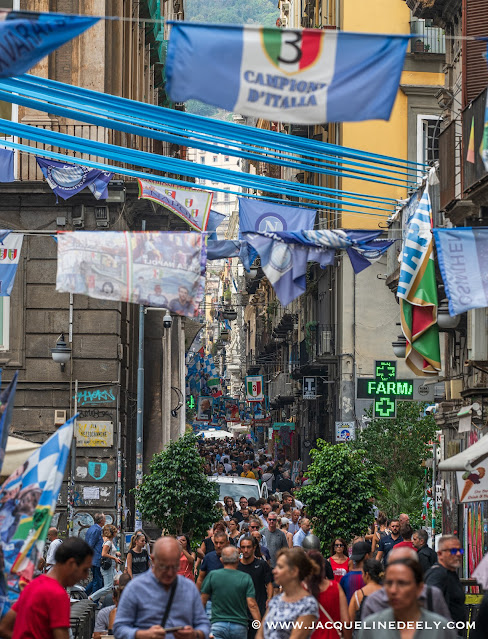
Again in Naples I made use of the 70-200mm telephoto and how it compresses a scene, particularly as we walked along the famous "Christmas Alley" and beyond, jammed with visitors. I focused mid scene into the distance and was able to convey the density of people along this narrow street. 


Traveling with a camera in hand offers so many creative options. Being more observant and thinking outside the box can lead you to interesting scenes and images such as these. More to follow in my next posting!

Thursday, May 18, 2023

Contributing to conservation through Photography

A few years back I met an amazing individual as a volunteer with the Wildlife Conservation Network. His name is Pablo Garcia and he had created an organization in 2009 called "The Global Penguin Society" with the goal of protecting penguin species around the globe. I found him to be a passionate advocate for a bird I have personally fallen in love with from my many travels to South America and Antarctica. Is is hard not to be totally enamored by these beautiful, charismatic creatures of the Southern Hemisphere. 

Pablo's story and the efforts he has made is really quite amazing including the creation of Patagonia Azul, or Blue Patagonia, a UNESCO biosphere reserve in Argentina which I hope to visit AND photograph one day!  In the meantime, Pablo has used my images in his presentations and also in scientific publications of which I am incredibly proud of. 

Pablo recently became the recipient of the "Indianapolis Prize for Conservation". The Indianapolis Zoological Society selected him, the first winner from South America, from a pool of 51 nominees and six finalists. He will receive an unrestricted $250,000 grant for his efforts to protect penguins and their habitat. Here is the article and a short video clip where several of my penguin images were featured. 

Thursday, November 3, 2022

NANPA 2023 Top 100 Showcase Selection!

It has been a couple of years since I submitted any of my work to the North American Nature Photography Association's Annual Showcase and after visiting Antarctica in late 2021/2022 felt I had a few images worthy of submission. I was very happy to recently learn that one of these made the top 100 of all the final images selected. This is from thousands of entries! 

It is an image I captured while in the Beagle Channel returning from Antarctica en route to the port of Ushuaia, Argentina. We had phenomenal weather and the waters of the channel were like glass when a small pod of Peale's Dolphins made an appearance alongside the ship. I quickly made my way down to the lowest level so I could potentially capture some close up shots. This required paying very close attention to their movements and awaiting those moments when they briefly broke the surface of the water. 

Using my trusty Nikon D500 with the fabulous lightweight Nikon 300mm f/4 PF lens, I fired off short bursts of several images over a period of about 15 minutes or so, before they decided they had had enough fun and vanished below the depths. I was so very happy to have captured this particular image with both the reflection and the eye! 

1/2500s, f/7.1 @ ISO 1000


As more and more photographers submit their images and the standard each year seems to be getting higher and higher, having any image selected is a personal achievement. It reaffirms and makes the time, work and effort involved in being a professional wildlife photographer all the more worthwhile.

My advice for getting your images selected and published are to not only submit your best images, but of subjects not typically seen, unusual behavioral or compositional shots and of course, technically sound.  

The beautiful NANPA Expressions publication will be available with all the winning images in 2023 and I will post more information on that when all the winners are announced. 

Return to the White Continent!

After two long years of no overseas work, in December, 2021 I was thrilled to finally make a return visit to the bottom of the world on a seven week assignment with Albatros Expeditions. This was my first contract with the renowned tour operator who are based in Copenhagen, Denmark. Albatros Travel Group has been around for a very long time, but their polar expedition side is relatively new. 

I was both excited and intrigued to work for a new company on one of their new Polar vessels, Ocean Victory. The vessel is part of a brand new generation of low-energy vessels, with 4 diesel engines and 2 electro engines, all controlled electronically to optimize speed and fuel consumption.

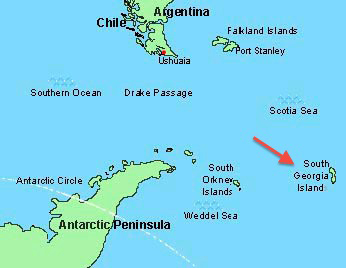
Over the course of seven weeks, I crossed the notorious Drake Passage seven times! We visited the South Shetland Islands, the Antarctic Peninsula and even crossed the Antarctic Circle. Fate led us into the Weddell Sea to avoid bad weather where I saw my very first emperor penguins! We also visited the beautiful Falkland Islands and South Georgia Island, which also happens to be one of my favorite places on the planet. 

Travel to these wild and remote places is an experience like no other and for many, a once in a lifetime trip. Here are some of my favorite photographic moments.

Juvenile Emperor Penguins


Juvenile Fur Seal


Charlotte Bay, Antarctica


Peale's Dolphins


Light-Mantled Albatross


Wednesday, August 18, 2021

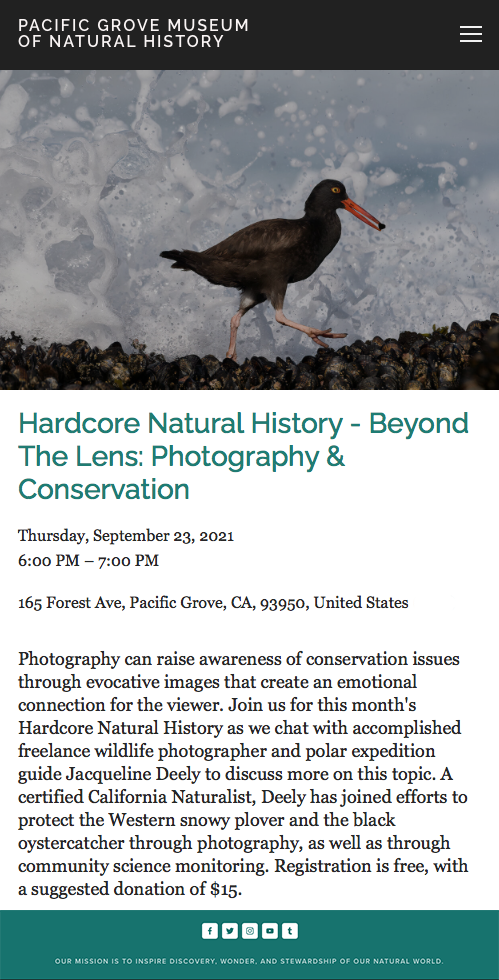
Talk at the Pacific Grove Museum of Natural History

I am thrilled to have been invited to do a talk on September 23rd at the Pacific Grove Museum of Natural History in Pacific Grove, California as part of their Hardcore Natural History Speaker Series. 

The idea came about in a conversation with the museum's director of education and outreach, Liese Murphree relating to their wonderful new "Changes" Exhibit. The year-long speaker series is focused on changes in Monterey County habitats over time, the impact of humans in these landscapes, and the role of humans in protecting them for the future. 

Photography plays an important role in conservation and I look forward to discussing how it has shaped my own personal journey both as a photographer and resident of this incredibly beautiful part of the world.  I hope you can join me!  

Learn more and REGISTER HERE

Pacific Grove Museum of Natural History


Tuesday, June 9, 2020

NANPA's Annual Showcase 2020

Every year, the North American Nature Photography Association (NANPA) hosts a photography competition for its members. Thousands of entries are submitted with 250 images selected by an esteemed panel of judges for publication.

Winning images tend to be those that are not only well executed both visually and technically, but contain scenes or subject matter not commonly photographed or submitted. As with any photo competition, it helps to view previous winning entries. This will guide you as far as what it is judges are looking for and how you can potentially submit images they may not have seen before.
Bears and eagles tend to be highly popular, so if you are planning on submitting images of either subject, they had better be extra special in order to grab the judge's attention.

This black oystercatcher was a top 100 selection and I was so thrilled to share this beautiful bird, which I rarely see either submitted or winning nature photography competitions. As with much of our wildlife these days, it is facing challenges primarily due to coastal development and human disturbance. You can learn more HERE.


Art in Nature Photography Festival

I am thrilled to be one of the eight judges in this year's "Art in Photography Festival" at the renowned Ward Museum, Salisbury University, Maryland.  As with many events and activities around the globe, this year's competition will be a little different in that it will be virtual.

With twelve categories, there is something for everyone, wherever your interest in nature photography lies. The competition is now open for entries up to July 8th with the exhibit taking place from July 10th - 12th.

You can learn more HERE


Wednesday, May 6, 2020

Helping Ourselves by Helping Nature

I know this is a difficult time for many and priorities have changed in various aspects of our lives. But if like me, you now have some extra time on your hands, there are ways to put that time to good use and where social distancing is possible. Nature heals and this is a wonderful way to feed our spirits when it is easy to feel low.

If you are able to get out in nature, many organizations are in need of volunteers, as crucial funds diminish and programs come to a halt. This in turn will have a drastic impact on the wildlife, the communities and the environments they support. Wherever your interest lies, whether that is nature related or something else entirely, there is something for everyone.

This year I officially became a volunteer with the Pacific Grove Museum of Natural History with an interest in their Black Oystercatcher Monitoring Program. This involves observing nesting birds in various locations in the Monterey Bay area, gathering and documenting data as part of an ongoing research study.

It is a win, win situation for me and the birds, as it not only makes me feel good and useful, but I also get to see and photograph these beautiful birds. I was also recently highlighted in the "Volunteer Spotlight "section of the museum's newsletter.

New Nature Blog!

Announcing my new nature blog, "All Things Wild", where I will share short stories from my experiences in the natural world.

Wildlife photography requires a great deal of time watching and waiting. It is during these times of observation that I have discovered some remarkable things about my subjects and the environments they call home.

I created the blog with the sole purpose of sharing some of the things I have learned along the way and I hope you will subscribe and follow along!

Monday, May 20, 2019

A morning at Point Lobos State Natural Reserve

This morning I headed over to Point Lobos State Natural Reserve with a specific goal in mind...to photograph the Brandt's Cormorants at Bird Island. Right now these birds are busy preparing for nesting season and there is plenty of action!


Males choose the nest site and display to ward off rivals and attract a mate. Displays include drawing head back with blue throat pouch extended and bill pointed upward, spreading tail, and fluttering wings; also thrusting head forward and downward in rapid repeated strokes.


The nest site is on ground, either level or steeply sloped. The nest consists of a mound of seaweed, eelgrass, algae, cemented by droppings. Most nest material is obtained underwater with the male doing most of gathering and the female most of the building. A pair may use the same nest every year, adding to it annually.

While at Bird Island, I met another photographer who kindly shared the location of three Black-crowned Night Heron nests, two of the nests already with chicks, while the third had three beautiful pale green eggs being carefully tended by the female.


All these nests are located on small islands so away from human disturbance. They only thing they have to contend with are predators including crows, gulls, hawks and a resident pair of peregrine falcons. If unfledged chicks happen to fall out of the nests to the rocks or ocean below, they have pretty much sealed their fate.


Deriving its name from the offshore rocks at Punta de los Lobos Marinos, Point of the Sea Wolves, where the sound of the sea lions carries inland, the Reserve has often been called "the crown jewel of the State Park System" and it is easy to see why. Spectacular scenery, rock formations, hidden coves with turquoise water, and an incredible array of birds, wildlife, plants and trees can be found here. There is nowhere else like it on earth and I am so very fortunate to have it right on my doorstep.

If you decide to visit, weekends can be crazy, so arriving at the park when it opens at 8:00am is best. Otherwise, weekdays are going to be your safest bet.

Tuesday, March 19, 2019

South Georgia on my mind...

Having recently returned from several weeks at the bottom of the world, I am now sifting through the thousands of images I shot bringing back wonderful memories from the amazing places visited.

If you ever decide to visit Antarctica and if funds allow, an itinerary that includes South Georgia Island will be well worth the investment.

South Georgia Island has to be one of the most mind blowing experiences when it comes to the sheer number of birds and wildlife that inhabit this very special place in the Southern Atlantic Ocean.

Home to some of the largest king penguin populations on the planet, it can be overwhelming to first time visitors, especially when landing at Salisbury Plain or St. Andrews Bay.  Each of these sites accommodate king penguins in the hundreds of thousands! I have seen eyes well up and jaws drop at the mere sight and sound of nature on such a massive scale. On a previous trip, one traveler in particular with tears in their eyes said to me "Jackie, I don't know what to say, I am completely overwhelmed!"


January in particular is prime baby time with fur seal pups scattered along the beaches sleeping, nursing, hanging out in small groups or crying in search of their mothers. It is hard to not fall completely in love with them.

King penguins come and go, mating, bickering, sitting on eggs, tending their young, or emerging from the water with bellies full, as they make their way back to the colony to feed their hungry offspring. It is hard to comprehend how they can possibly find each other in the chaos, but somehow they do! The sounds coming from the colony is constant as conversations and calls fill the air!


Predators such as the Antarctic brown skuas hover above in search of eggs or small chicks to pluck away at opportune moments. Giant Southern Petrels also present a danger both on land and in the water. Elephant seals are also seen resting along the beaches or among the tussock grass. At this time of the year the massive males have returned to sea while the females and juveniles remain.


At Gold Harbor which happens to be one of my favorite locations, the king penguin colony is set against a stunning backdrop with the Bertrand Glacier cascading down and on a day like the one we had, glorious sunshine and blue skies made it picture postcard perfect! As part of the expedition team, I have the benefit of going ashore in the the shore party staff members. This allows me to capture wide angle and landscape images without people.

Soon after landing at Gold Harbor, I quickly unpacked my bag and set up my gear as it would not be long before guests started to arrive. As I was doing this, a pair of king penguins began to head right in my direction.  Oh what luck as the image I have so wanted to capture in this spot was transpiring right before my eyes!  A pair of king penguins on the beach in the foreground set against the stunning glacier and scenery.  I waited as they got closer and stopped, then slowly positioned myself to get the right composition, getting down low to include the background. As they turned their heads to face each other I fired off a few images before they decided to move on. This has to be one of my favorite images from South Georgia and one I intend to grace the walls of my home.

Tuesday, December 18, 2018

Photography in the Tropics

Having returned from my recent trip to Costa Rica and Panama as guest photography host with UnCruise Adventures, I reflected upon the challenges we faced from a photography perspective and wanted to share some tips and advice.

If you are planning a visit to the tropics, here are some key things to keep in mind.

1. The heat and humidity will cause your lenses to "immediately" fog up if you are bringing your gear from air conditioned environments outside. Your best bet is to store your gear in an area where it is not being moved from one extreme to the other. Otherwise you need to allow time to acclimate to the temperature changes. Missing a great shot because your lens is drenched is not fun. Moisture can wreak havoc on your gear and you don't want this to accumulate inside your camera body, so make sure you bring silicon packets as an absorbent and keep them in your camera bag.

2.  Birds and wildlife are difficult to spot particularly under the rainforest canopy. There are so many branches and leaves, so unless your subject is clearly visible and out in the open, the challenge is to find openings in order to acquire focus and get a half decent shot.

A telephoto or zoom with a focal length of at least 300mm is needed in order to get close enough to your subject. I had both a 300mm prime and a 200-500mm zoom lens which I would switch depending on just how much I wanted to carry around in the heat. I also had an external flash with a better beamer, which helps under the canopy, but you need to know how to adjust your flash output to avoid "over flashed" images. A natural look with just enough light to illuminate your subject is all you need.


3. Carrying a lot of gear while traipsing through the rainforest is tough and at times, I just wanted to ditch it all and go with one camera/lens combo. I used a BlackRapid Double Breathe harness, which I use all all my travels. It allows me to balance one camera/lens on either side, is very secure and the most comfortable I have found to date.

Depending the gear you bring and your expectations as far as the kind of images you wish to acquire, it might be better to bring one camera and one lens with a wide focal range, such as an 18-300mm. However, low light is not your friend and higher quality lenses with the ability to use wide apertures such as f/2.8 will allow you to use higher shutter speeds at lower ISO's. Unless your subject is stationary, much of the wildlife under the canopy will be moving, such as monkeys and birds, so at times compromises have to be made in order to just get the shot and in many cases, it is higher ISOs.

4. Light in the tropics can be harsh as the sun rises and sets quickly with direct overhead light predominant throughout the day. If under the canopy, beams of light filtering through the leaves and branches can be used creatively, or not. The key is to avoid pointing your camera up at a dark subject against a bright background and to look for alternatives. Otherwise, a flash is going to be your best bet. By exposing the image so the background is not blown out, then filling in with a flash, you will get the best results. Or, you purposely blow out your background in order to get your subject exposed correctly.

Preferably you want to capture your subject in natural light with no excessive bright or dark areas and at times you might be lucky, so always be aware of where you are in relation to your subject. Sometimes just moving to an alternate spot will give you the best vantage point and lighting situation.


5. Focus on the small stuff as there are so many incredible insects and amphibians. Colorful flowers are abundant and make beautiful subject matter as an alternative to wildlife. If you like to photograph the small stuff, a macro lens is worth the investment, even if you rent one instead of making a full blown purchase.

Out of the canopy and on tropical beaches, you may encounter various species of crab. They key here is to get down low in order to capture an intimate portrait of your subject. Lying on a beautiful white sand beach is not such a bad thing, so give it a go!

A word of warning...make sure you wear a wide brimmed hat and use plenty of sunscreen, otherwise you will end up with a nasty, burnt red neck, just like I did!


6. Tripod or not? In my case, since our trip was quite mobile, a tripod was of not much benefit. A monopod was easier to carry and position on narrow or uneven trails. However, if you are staying in a lodge or visiting areas where you will have time to spend watching and waiting for birds and wildlife, then yes, a tripod will allow you to set up your gear, particularly those long lenses and shoot at the ideal lower ISO's when working in difficult light.


7. Finally the weather. Depending on the time of year, you will need something to cover your gear should it rain. I visited at the end of the rainy season, so rain was minimal. During the couple of times it did rain, I brought Optech plastic rain sleeves and also a waterproof fabric cover I got off eBay, which I prefer since the plastic covers are a temporary solution and I don't like the idea of buying items that are disposable and bad for the environment. I also have a built in rain cover for my backpack, but you can also buy these separately.

The good thing about this time of year is the potential for some interesting skies, leading to beautiful, dramatic sunsets!

If you have any questions or need additional advice, please feel free to contact me!


Thursday, October 11, 2018

Tips for Whale Watching in Monterey Bay!

Yesterday morning I headed out on a whale watching tour in Monterey Bay. Now that I am a resident of this incredible area, I felt it was time I indulged myself in something people travel thousands of miles to see, which is literally on my doorstep!

I chose Monterey Bay Whale Watching as I often see their boats heading out they have excellent reviews. I also like the double level viewing platforms, which makes the vessel seem less crowded when it is packed to the gills! This allowed me more maneuverability on the lower level, which I tend to prefer.

Heading over to an area between Marina and Moss Landing, we were treated to several awesome humpback whale sightings which included pectoral fin slapping, lunge feeding and breaching!  We also encountered a large number of dolphins including Risso's and Pacific White-Sided dolphins.

ISO 640, f/7.1 @ 1/2500s, 300mm


Here are some useful tips for going out whale watching, particularly if you are susceptible to sea sickness! There were several people on this trip that did not fair too well and being out on the water for 4 hours feeling like absolute crap is not fun at all.  I have been there and done that on more than one occasion and it is only through my annual trips to the polar regions that I have finally found a solution.

First off, I recommend taking medication "the night prior" to your whale watching trip and NOT half an hour before boarding. This not only gets the medication into your system several hours prior, it helps you get a good night's sleep as many of these medications also cause drowsiness. I also take another tablet the morning of the trip, about an hour or two prior. I personally think the "recommended" half an hour prior is way too late because once you feel sick, the medication is not going to have an impact.

I eat a good breakfast consisting of tea, toast and a bowl of oatmeal. I avoid greasy food and also skip the coffee. Going out on a boat on an empty stomach is asking for trouble. I also bring saltine crackers and ginger ale on the boat to nibble on an sip throughout.

I avoid sitting inside the boat or at the rear where the diesel fumes tend to be more noticeable. I occasionally watch the horizon and make sure I have fresh air in my face. I will put the camera down every so often, as looking through a view finder for long periods can lead to feeling queasy.

This is the ONLY method that works for me.  It might not work for you, but I think it is worth trying if you are not having much success?

ISO 640, f/7.1 @ 1/2000s, 300mm
From a photography perspective, bringing a zoom with a wide range is going to cover a variety of situations as yesterday I failed to do this and regretted it.  I only brought my Nikon 300mm f/4 PF ED VR lens and a 1:4 teleconverter and was very limited in what I could ultimately capture.  With a breaching humpback calf so very close to the boat, I missed out on some awesome shots.  Lesson learned!!!

Capturing a breaching whale involves shooting at a high shutter speed and in continuous drive mode. Paying attention to the behavior and where it might potentially emerge from the water also helps. I will focus roughly in the area where I think it might happen and scan back and forth with my other eye open, so I can quickly reacquire focus on the whale if and when it happens!

As for clothing, wrap up with several layers as a sunny day out on Monterey Bay can be very deceiving.  I found myself switching from a cap to a warm beanie and adding another layer as the wind picked up.

I hope these tips will both help and inspire you to also get out there give whale watching a try, whether that is in Monterey Bay or some other location around the globe!

ISO 720, f/8 @ 1/2000s, 300mm